
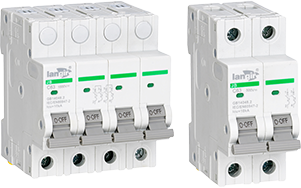
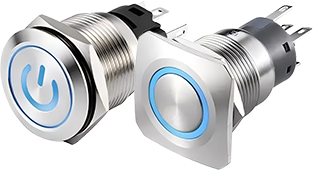
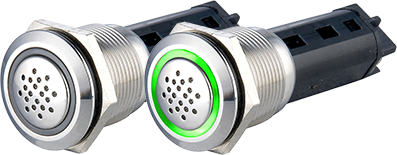
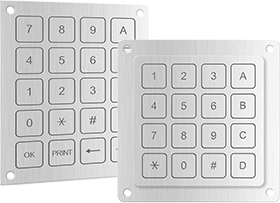
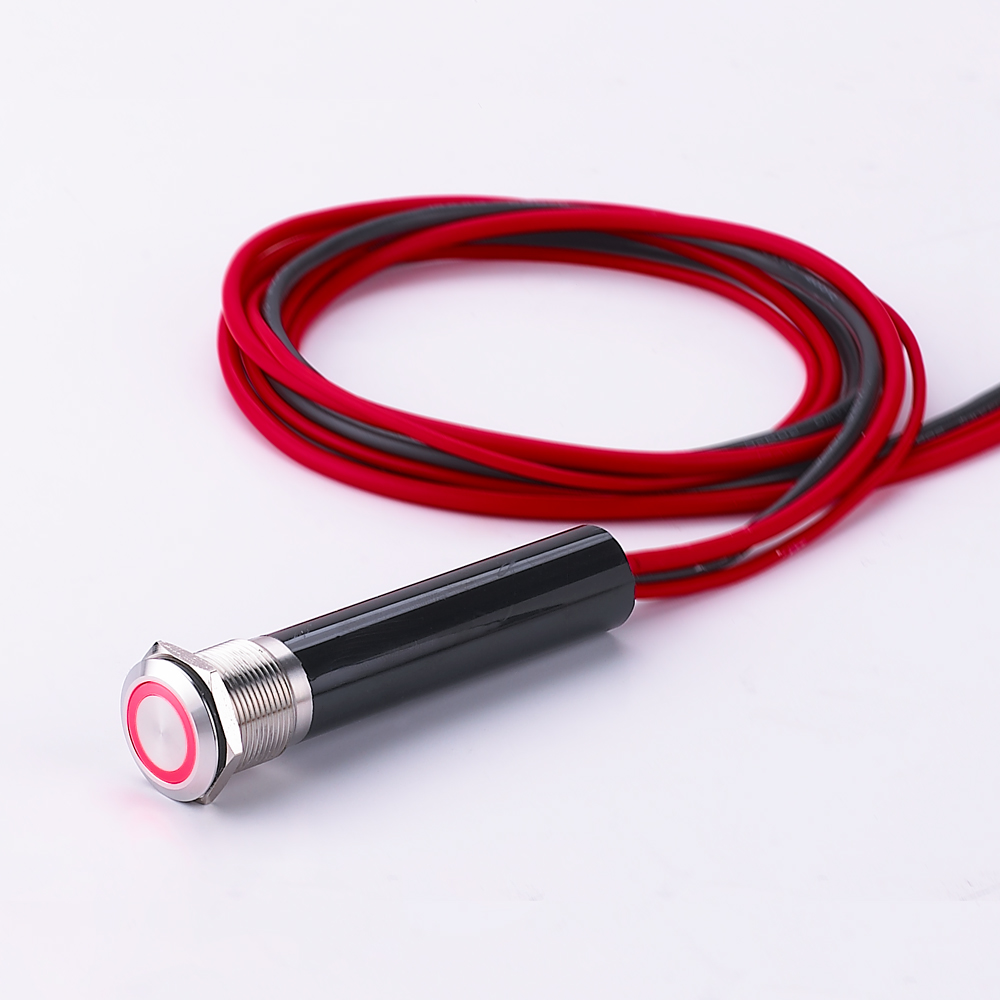
- 19mm diameter panel cutout latching switch
- Variety LED option
- Dot, ring or symbol illumination available
- Multiple actuator options
- Pilot indicator option
- IP67 rated
- Momentary Off-(On), Latching Off-On
[/vc_column_text][/vc_column_inner][vc_column_inner width=”1/3″][vc_single_image image=”8922″ img_size=”full” alignment=”center”][vc_custom_heading text=”Brochure” font_container=”tag:h3|font_size:18|text_align:center|color:%23f19901″ use_theme_fonts=”yes” link=”url:https%3A%2F%2Fwww.langir.com%2Fwp-content%2Fuploads%2F2019%2F04%2Fl19y-high-current-anti-vandal-switch.pdf|title:L19Y%20High%20current%20anti%20vandal%20switch|target:_blank”][/vc_column_inner][/vc_row_inner][/vc_column][/vc_row][vc_row][vc_column][vc_column_text]
Specifications
[/vc_column_text][vc_column_text]
- Electrical Rating: 21A, 24VDC
- Mechanical Life: 1,000,000 Cycles
- Electrical Life: 50,000 Cycles
- Contact Resistance: 50mΩ Max.
- Insulation Resistance: 1000 MΩ Min.
- Dielectric Strength: 2,000VAC
- Operating/Storage Temperature: -20°C to 55°C
- Travel: 1.50mm
- Moisture Protection: IP67
- Actuation Force: 4N
- Panel Thickness: 1-11mm
- Mounting Nut Torque: 5-14Nm
[/vc_column_text][vc_row_inner][vc_column_inner][vc_column_text]
Order Code
[/vc_column_text][vc_column_text]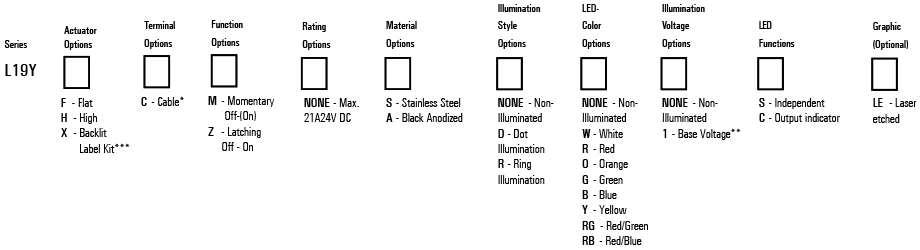 [/vc_column_text][vc_column_text]NOTES
( ) denotes function is momentary
* Cable length 1200mm
** The base voltage for rating
*** 5 ICON labels included check backlit label kit page, No illumination options(code examples: L19YLCMSWC)[/vc_column_text][/vc_column_inner][/vc_row_inner][/vc_column][/vc_row][vc_row][vc_column][vc_column_text]
Actuator Options
[/vc_column_text][vc_column_text]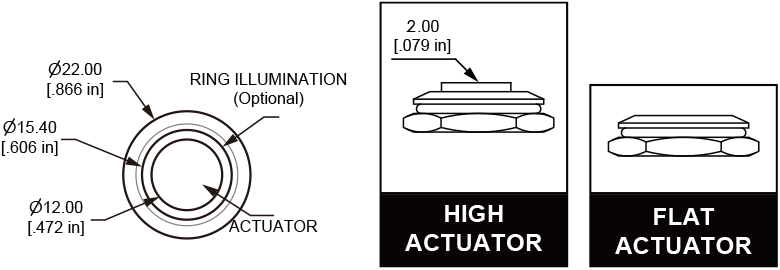 [/vc_column_text][/vc_column][/vc_row][vc_row][vc_column][vc_column_text]
Panel Cutout / Illuminated Options
[/vc_column_text][vc_column_text]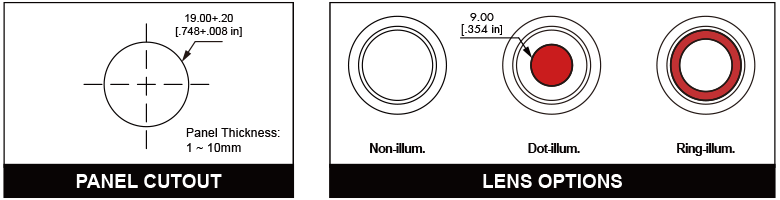 [/vc_column_text][/vc_column][/vc_row][vc_row][vc_column][vc_column_text]
Dimension
[/vc_column_text][vc_column_text]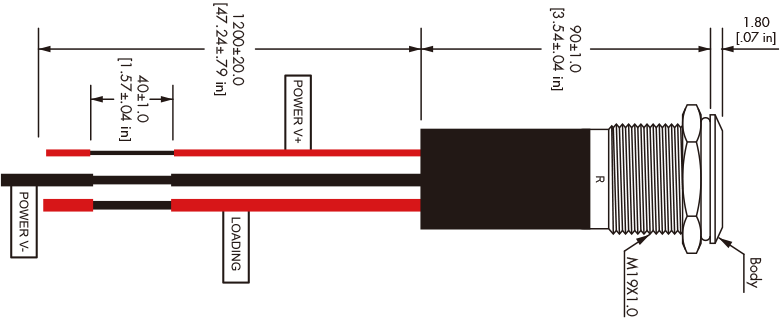 [/vc_column_text][/vc_column][/vc_row][vc_row][vc_column][vc_column_text]
Wiring Diagrams
[/vc_column_text][vc_column_text]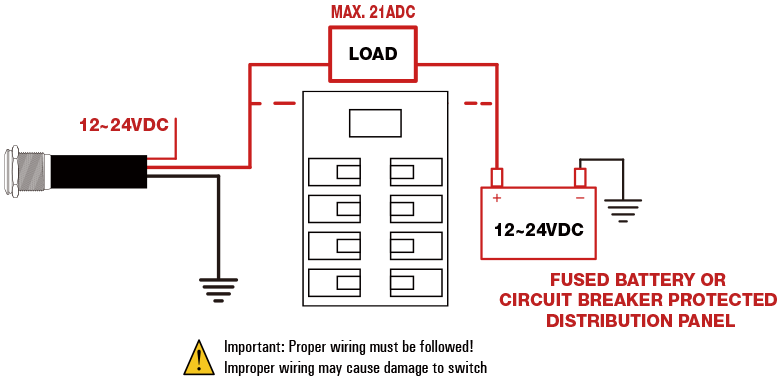 [/vc_column_text][/vc_column][/vc_row][vc_row][vc_column][vc_column_text]
FAQs
[/vc_column_text][/vc_column][/vc_row][vc_row][vc_column][vc_column_text]Q1: What is a latching switch?
A1: It’s a type of switch that maintains its position or state even after the actuating force is removed.
Q2: How does a latching switch work?
A2: It operates using a mechanism that mechanically holds the contacts in either the open or closed position until manually toggled again.
Q3: What are the advantages of using latching switches?
A3: They offer a stable state, energy efficiency, and the ability to maintain a specific condition without continuous power consumption.
Q4: In what applications are latching switches commonly used?
A4: They are commonly used in power management systems, control panels, automotive electronics, and home automation applications.
Q5: Can latching switches be used for both AC and DC applications?
A5: Yes, they can be designed to handle both AC and DC electrical currents, depending on their specifications and ratings.
Q6: How are latching switches different from momentary switches?
A6: They differ from momentary switches in that they maintain their state, while momentary switches return to their original state once the actuating force is released.
Q7: Are latching switches available in different sizes and configurations?
A7: Yes, they come in various sizes, configurations, and mounting options to accommodate different application requirements.
Q8: Can latching switches be remotely controlled or integrated with other systems?
A8: Yes, they can be integrated into remote control systems, allowing for remote operation or integration with other electronic devices.
Q9: Are latching switches prone to accidental toggling or unintended state changes?
A9: They can include mechanisms such as locking mechanisms or protective covers to prevent accidental toggling and ensure stable operation.
Q10: How do I select the right switch for my application?
A10: Consider factors such as current and voltage ratings, contact materials, actuation force, mounting options, and environmental conditions to ensure compatibility and optimal performance.[/vc_column_text][vc_zigzag]