New_category: News

News

  • What is Thermal Protection?

    What is Thermal Protection?

    [vc_row][vc_column][vc_column_text]

    What is Thermal Protection?

    [/vc_column_text][vc_column_text]Thermal protection is a method of detecting over-temperature conditions and disconnecting the power to the electronic circuits. The protection prevents fires or damage to electronics components, which may arise due to the excess heat in the power supplies or other equipment.

    Temperature in power supplies rises due to both environmental factors as well as heat generated by the components themselves. The amount of heat varies from one power supply to another and may be a factor of design, power capacity and load. Natural convention is adequate for removing the heat away from smaller power supplies and equipment; however, forced cooling is required for larger supplies.

    When the devices operate within their safe limits, the power supply delivers the intended power. However, if the thermal capacities are exceeded, the components start deteriorating and eventually fail if operated under excess heat for long. The advanced supplies and electronic equipment have a form of temperature control in which the equipment shuts down when the component temperature exceeds the safe limit.[/vc_column_text][vc_column_text]

    Devices used to protect against over-temperature

    [/vc_column_text][vc_column_text]There are different methods of protecting power supplies and electronics equipment from over temperature conditions. The choice depends on the sensitivity and complexity of the circuit. In complex circuits, a self resetting form of protection is used. This enables the circuit to resume operation, once the temperature goes down to normal.[/vc_column_text][/vc_column][/vc_row][vc_row][vc_column][vc_zigzag]

    Get Custom Quote
    We’ll get back to you within 12 hours.
    Drag & Drop Files, Choose Files to Upload You can upload up to 3 files.
    [/vc_column][/vc_row][vc_row][vc_column][vc_zigzag][/vc_column][/vc_row]

  • Maintenance and repair methods of switching power supply

    Maintenance and repair methods of switching power supply

    [vc_row][vc_column][vc_column_text]

    Maintenance and repair methods of switching power supply

    [/vc_column_text][vc_row_inner][vc_column_inner][vc_single_image image=”8773″ img_size=”1200X400″ alignment=”center”][/vc_column_inner][/vc_row_inner][vc_column_text]

    Switching power supply protection tutorial

    [/vc_column_text][vc_column_text]Switching power supply is an indispensable part of various electronic equipment, and its quality is directly related to the technical indicators of the electronic equipment and whether it can be operated safely and reliably. Since the main internal components of the switching power supply work in high-frequency switching conditions, the power consumption is small, the conversion rate is high, and the volume and weight are only 20%-30% of the linear power supply, so it has now become the mainstream product of the stabilized power supply. The maintenance of electrical defects of electronic equipment is based on the principle of easy to difficult. Basically, the power supply is first started. After the power supply is confirmed to be normal, other parts of the maintenance are carried out, and the electrical shortcomings of the power supply account for the largest part of the electrical shortcomings of electronic equipment. most. Therefore, understanding the basic operation principle of the initial power supply, understanding its maintenance skills and common shortcomings will help shorten the maintenance time of electronic equipment shortcomings.[/vc_column_text][vc_column_text]

    Disadvantages of switching power supply and maintenance methods

    [/vc_column_text][vc_column_text]1. No output stabilizer tube is normal. This phenomenon indicates that the switching power supply is not operating or has entered a protection condition. The first thing to do is to measure whether the recommended pin of the power control chip has a recommended voltage. If there is no recommended voltage or the recommended voltage is too low, check whether the resistor and the external components of the pin are leaking. At this time, if the power control chip is normal, it can be activated by the above inspection. Find the shortcomings. If there is a recommended voltage, measure whether the output terminal of the control chip has high or low level jumps at the moment of power-on. If there is no jump, it means that the control chip is broken, the peripheral oscillation circuit components or the protection circuit are defective, and the control can be replaced first. Chip, then check the peripheral components; if there is a jump, it is generally a bad or damaged switch tube.

    2. For stable burning, first check the large filter capacitors on the 300V, the diodes of the rectifier bridge, and the switching tubes. Problems with the anti-interference circuit can also lead to stable burning and blackening. Need to pay attention to: the stable burning caused by the breakdown of the switch tube will generally burn out the current detection resistor and the power control chip. Negative temperature coefficient thermistor is also very simple and stable to be burned out.

    3. There is an output voltage, but the shortcoming of the output voltage is too high generally comes from the voltage stabilization sampling and voltage stabilization control circuit. The DC output, sampling resistor, faulty sampling amplifier such as TL431, optocoupler, power control chip and other circuits together form a closed control loop. Anything wrong will cause the output voltage to rise.

    4. The output voltage is too low. In addition to the voltage stabilization control circuit will cause the output voltage to be low, there are also some of the following reasons also cause the output voltage to be low:

    1. Switching power supply load has short-circuit shortcomings (especially DC/DC converter short-circuit or poor function, etc.). At this time, all loads of the switching power supply circuit should be disconnected to distinguish that the switching power supply circuit is still a load circuit with shortcomings. If the voltage output of the disconnected load circuit is normal, it means that the load is too heavy; or it is still abnormal, indicating that the switching power supply circuit has shortcomings.
    2. The failure of the rectifier diode and filter capacitor at the output voltage can be judged by substitution method.
    3. The decrease of the function of the switching tube will inevitably lead to the failure of the switching tube to conduct normally, which will increase the internal resistance of the power supply and decrease the load capacity.

    [/vc_column_text][vc_zigzag]

    Get Custom Quote
    We’ll get back to you within 12 hours.
    Drag & Drop Files, Choose Files to Upload You can upload up to 3 files.
    [/vc_column][/vc_row][vc_row][vc_column][vc_zigzag][/vc_column][/vc_row]

  • What is a Capacitive switch? and Advantages of Capacitive switch

    What is a Capacitive switch? and Advantages of Capacitive switch

    [vc_row][vc_column][vc_column_text]

    What is a Capacitive switch? and Advantages of Capacitive switch

    [/vc_column_text][vc_row_inner][vc_column_inner][vc_single_image image=”7771″ img_size=”1200×300″][/vc_column_inner][/vc_row_inner][vc_column_text]Capacitive switches have gained a lot of popularity in recent years as an alternative to membrane switches, mechanical switches, elastomer keypads, and other input device options. With no mechanical parts to wear down, a slim profile that can be applied to curved surfaces, and intricate backlighting options, capacitive switches offer some exciting possibilities for your user interface. The Langir Electric started investing in the development of capacitive switch technology early in the interface’s inception. This has given our design engineers the experience to help you develop a world class solution for your product.[/vc_column_text][/vc_column][/vc_row][vc_row][vc_column][vc_column_text]

    What is a capacitive switch?

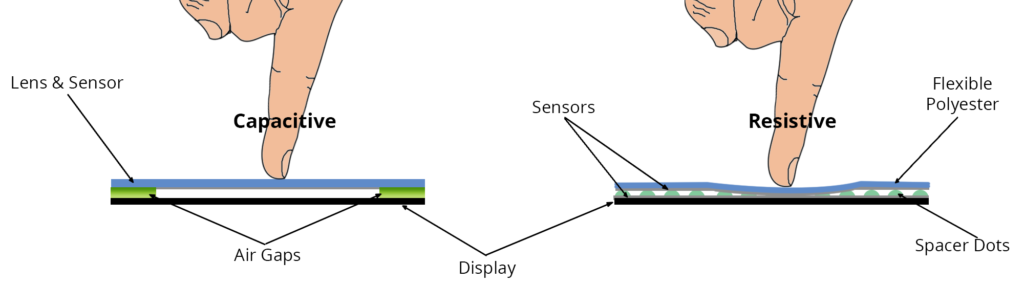
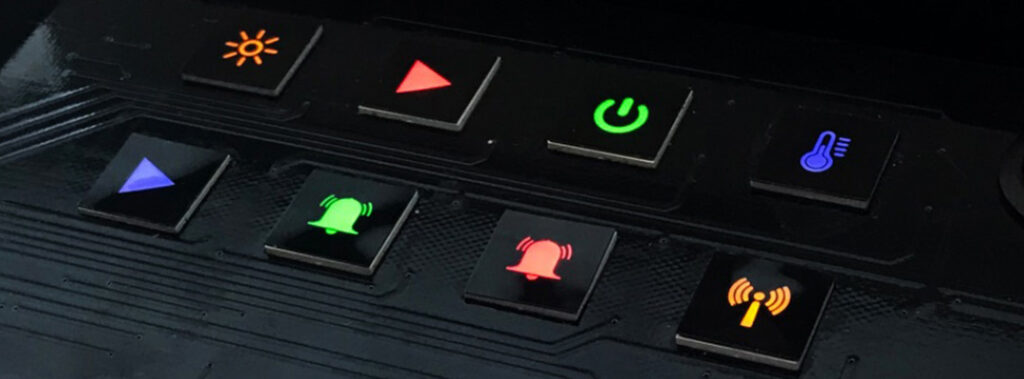
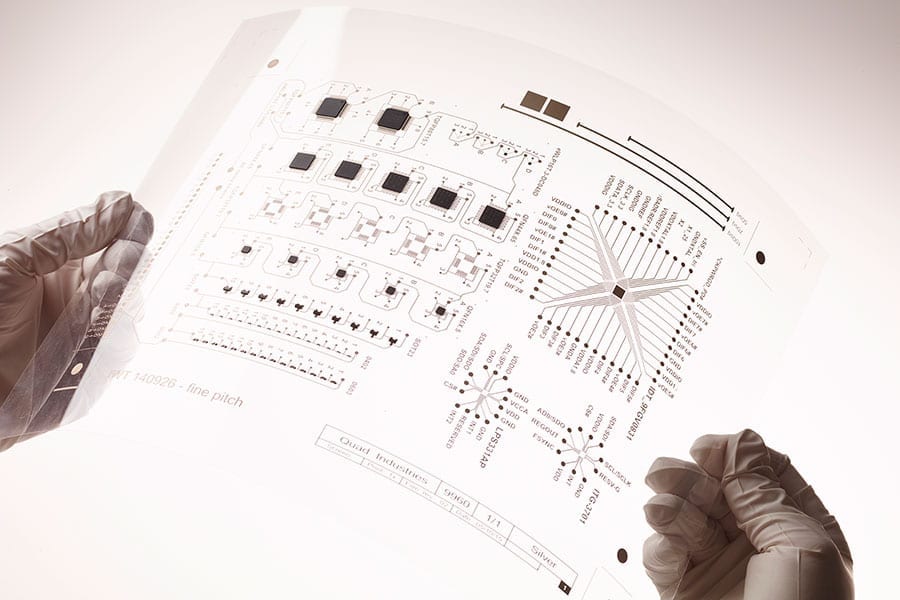
    [/vc_column_text][vc_column_text]A capacitive switch is an electronic capacitor that measures changes in capacitance values when a conductive object such as your finger moves closer to the sensing area. The change in that value is interpreted and registers that change as an activation of the switch. A capacitive switch can be either a flexible printed circuit or a sensing pad on a rigid PCB. A capacitive switch can incorporate a lot of functionality that is not easily attained with a normal membrane or mechanical switch. Capacitive switches can have intensity sliders, sensitive areas in multiple shapes such as a circle, and can have varying levels of sensitivity for activation. You also can have options like a proximity sensor incorporated into a capacitive switch for additional functional benefits. As a capacitive switch is a sensor that senses through a non-conductive surface, thicker substrates can be used such as safety glass, or acrylic materials for a very robust switch. This can also give the ability for additional gasketing for harsh environments. It is also possible to achieve very intricate backlighting solutions with capacitive switch technologies.[/vc_column_text][vc_column_text]

    Capacitive Switch Construction

    [/vc_column_text][vc_column_text]A capacitive switch will generally need about three layers to function. A graphical overlay, a circuit layer, and a backing material. The graphical overlay could be any non-conductive material of various thicknesses including; glass, polyesters, polycarbonates, acrylic materials, and many other non-conductive materials. The circuit layer can be a thin plastic flex circuit, or a sensing pad laid out on a rigid PCB. The backing material could be a metal back plate, glass, plastic, or can be adhered to part of your product. It is also possible to adhere a flexible circuit to the inside of a sealed container with a graphic outside to protect the electronics in harsh environments. Capacitive switch constructions can be more complex depending on backlighting options or shielding requirements.[/vc_column_text][vc_column_text]

    Metal-over-cap switch

    [/vc_column_text][vc_column_text]A metal-over-capacitive switch is a unique solution that allows the use of aluminum, steel, or other conductive materials in front of a capacitive switch or sensor. This can allow a product to maintain an all metal look to it while still utilizing capacitive technologies that give the ability for very finite sensing options.[/vc_column_text][vc_column_text]

    Advantages of Capacitive Switches

    [/vc_column_text][vc_column_text]Thin construction that can be applied to curved surfaces
    No moving parts to wear down leading to a long-life span
    Intricate backlighting possibilities
    Functionality that is not easily available in other switch options
    Proximity or sub surface sensing
    Capacitive Switch Options
    Custom color matching and intricate graphical layer design – Our team has the experience to make the face of your product stand out from the field.
    Proximity Sensing – Capacitive switches can have built in proximity sensing options to add functionality to your product
    Enhanced Functionality – capacitive switches can incorporate unique switch functionality such as sliders, wheels, locking keys, and other features.
    Metal-over-cap – special capacitive switches and sensors can be built using metal-over-cap technology that allows conductive materials over the sensor area.
    Tactile feedback – Tactile feedback can still be achieved on a capacitive switch using haptics and other methods
    Embossed Keys – Key areas can be embossed, or raised or lowered, to give a feel guide to where the key is.This can be a pillow or ring emboss.
    Backlighting – Custom backlighting solutions for your product can include; led light guide films, EL Lamps, and fiber optics. While LED light guide films can provide the most even lighting options, each application has its advantages and we can help guide you to the best solution for your project.
    Display windows – These can be incorporated into a variety of shapes and sizes and can be tinted or clear.
    Shielding – Capacitive switches can be built with EMI, RFI, and ESD layers to protect your product.
    Backplates – Capacitive switch assemblies can be stand-alone flexible circuits or built up on rigid backplates including aluminum, steel, or other options.
    PCB’s –Capacitive switches can be sensing pads on rigid PCBs that can also act as a rigid backplate.
    Termination – A variety of terminations can be used to mate a capacitive switch to your product. Our team can match your specifications[/vc_column_text][/vc_column][/vc_row][vc_row][vc_column][vc_zigzag]

    Get Custom Quote
    We’ll get back to you within 12 hours.
    Drag & Drop Files, Choose Files to Upload You can upload up to 3 files.
    [/vc_column][/vc_row][vc_row][vc_column][vc_zigzag][/vc_column][/vc_row]

  • Product liability

    Product liability

    [vc_row][vc_column width=”2/3″][vc_column_text]

    What is product liability?

    [/vc_column_text][vc_row_inner][vc_column_inner][vc_single_image image=”8008″ img_size=”720×200″ alignment=”center”][/vc_column_inner][/vc_row_inner][vc_column_text]Product liability refers to situations where a customer purchases a product, and an issue with the product causes a bodily injury or property damage to a 3rd party. Business owners can be found responsible for the damages if the source of the issue can be traced back to the small business. Some of the common issues customers encounter that result in product liability claims include:[/vc_column_text][vc_column_text]

    • Products that cause bodily injury to the customer
    • Products that cause property damage
    • Sickness caused by food or beverages

    [/vc_column_text][vc_column_text]There are many different things that can cause a product issue, but 3 of the common reasons are:[/vc_column_text][vc_column_text]

    1. Design defect: This issue will be present in a product before it’s even made. It suggests that the design of the product is unsafe or faulty.
    2. Manufacturing defect: This issue suggests that something went wrong while the product was being made. Perhaps it was assembled wrong, or missing an important piece.
    3. Marketing defect: This type of issue has nothing to do with the product itself, but rather how it was marketed to the customer. Incorrect labelling, incorrect safety warnings (or lack thereof) or insufficient instructions are common marketing defects.

    [/vc_column_text][vc_column_text]The right product liability policy will help protect your business from legal costs if you’re found responsible for a product causing bodily injury or property damage to a 3rd party.[/vc_column_text][vc_column_text]We are always committed to providing customers with the best solutions and methods[/vc_column_text][vc_column_text]DownloadDownload(397KB)[/vc_column_text][/vc_column][vc_column width=”1/3″ css=”.vc_custom_1626837845586{background-image: url(https://test.langir.com/wp-content/uploads/2020/04/product-liability-insurance.jpg?id=8008) !important;background-position: center !important;background-repeat: no-repeat !important;background-size: cover !important;}”]

    Get Custom Quote
    We’ll get back to you within 12 hours.
    Drag & Drop Files, Choose Files to Upload You can upload up to 3 files.
    [/vc_column][/vc_row][vc_row][vc_column][vc_zigzag][/vc_column][/vc_row]

  • An anti-surge resistor

    An anti-surge resistor

    [vc_row][vc_column][vc_column_text]

    An anti-surge resistor

    [/vc_column_text][vc_column_text]An anti-surge resistor that delivers high power dissipation and high reliability in a compact case size? Vishay RCS series of thick film chip resistors has you covered.[/vc_column_text][vc_column_text]Anti-surge resistor[/vc_column_text][vc_column_text]We are always committed to providing customers with the best solutions and methods[/vc_column_text][vc_zigzag]

    Get Custom Quote
    We’ll get back to you within 12 hours.
    Drag & Drop Files, Choose Files to Upload You can upload up to 3 files.
    [/vc_column][/vc_row][vc_row][vc_column][vc_zigzag][/vc_column][/vc_row]

  • Super short Capacitive switch for TEEPTRAK solutions

    Super short Capacitive switch for TEEPTRAK solutions

    [vc_row][vc_column width=”2/3″][vc_column_text]

    Super short Capacitive switch for TEEPTRAK solutions

    [/vc_column_text][vc_row_inner][vc_column_inner][vc_single_image image=”7996″ img_size=”1000×200″ alignment=”center”][/vc_column_inner][/vc_row_inner][vc_column_text]Capacitive switch technology is based on the principle of signal detection through capacitance or resistive coupling (human touch) of identified generated input pulses.

    The touch surface can be designed with virtually any dielectric material including glass, plastic, polycarbonate, or any rough or smooth surface less than 25mm thick. Sensitivity is adjustable allowing operators to actuate the device with or without gloves. Because there are no moving parts, a capacitance switch is rated for more than five million cycles.

    Capacitance switch technology provides cost-effective design alternatives to other switch technologies. Open architecture allows for easy integration or retrofit into a wide range of switch applications.
    [/vc_column_text][vc_column_text]Super short capacitive switch[/vc_column_text][vc_column_text]

    • Non-illum.
    • Super short body:16mm
    • Robust and durable switch
    • Available with different bushing diameters(16~25mm)
    • Plastic color: Red, Green, Black, White and Blue

    [/vc_column_text][vc_column_text]DownloadDownload(323KB)[/vc_column_text][/vc_column][vc_column width=”1/3″]

    Get Custom Quote
    We’ll get back to you within 12 hours.
    Drag & Drop Files, Choose Files to Upload You can upload up to 3 files.
    [/vc_column][/vc_row][vc_row][vc_column][vc_zigzag][/vc_column][/vc_row]

  • Square bezel anti-vandal switch

    Square bezel anti-vandal switch

    [vc_row][vc_column width=”2/3″][vc_column_text]

    Square bezel anti-vandal switch

    [/vc_column_text][vc_row_inner][vc_column_inner][vc_single_image image=”7925″ img_size=”1200X400″ alignment=”center”][/vc_column_inner][/vc_row_inner][vc_column_text]The L19S and L22S is a pushbutton switch with vandal-proof features. The Square bezel anti-vandal switch provides a unique aesthetic feature of a 25mm square bezel over the standard round bezel. The panel cut-out size is 19mm and 22mm diameter and it provides IP65 rating for dust and moisture protection. It offers multiple options such as ring illumination, 1NO1NC or 2NO2NC circuits, stainless steel housing material, and many LED color options which also includes an RGB LED option. The switch is also available in either a momentary or a latching function and can also be supplied with laser etched power symbol. There is also the option to add wire leads for your convenience.[/vc_column_text][vc_column_text]Square bezel anti-vandal switch[/vc_column_text][vc_column_text]Square bezel anti-vandal switch[/vc_column_text][/vc_column][vc_column width=”1/3″ css=”.vc_custom_1626841182606{background-color: #d6d6d6 !important;}”]

    Get Custom Quote
    We’ll get back to you within 12 hours.
    Drag & Drop Files, Choose Files to Upload You can upload up to 3 files.
    [/vc_column][/vc_row][vc_row][vc_column][vc_zigzag][/vc_column][/vc_row]

  • Clearaudio ELECTRONICS Successful Solutions

    Clearaudio ELECTRONICS Successful Solutions

    [vc_row][vc_column][vc_column_text]

    Clearaudio ELECTRONICS Successful Solutions

    [/vc_column_text][vc_single_image image=”7923″ img_size=”960X400″ alignment=”center” css=”.vc_custom_1626842348696{background-color: #171513 !important;}”][vc_column_text]Being specialised in analogue music playback, it is our responsibility to promote continuous technological development to create improved standards that establish audiophile listening pleasure at its highest level. Perfection in manufacturing and measurement is reflected in a superior sound: the purest listening quality, and the reason we put our concentration on even the tiniest detail. Without exception, our electronics are made of selected components of the highest material quality.[/vc_column_text][/vc_column][/vc_row][vc_row][vc_column][vc_zigzag]

    Get Custom Quote
    We’ll get back to you within 12 hours.
    Drag & Drop Files, Choose Files to Upload You can upload up to 3 files.
    [/vc_column][/vc_row][vc_row][vc_column][vc_zigzag][/vc_column][/vc_row]

  • Super short Capacitive switch

    Super short Capacitive switch

    [vc_row][vc_column width=”2/3″][vc_column_text]

    Super short Capacitive switch

    [/vc_column_text][vc_row_inner][vc_column_inner][vc_single_image image=”7250″ img_size=”1000X250″ alignment=”center”][/vc_column_inner][/vc_row_inner][vc_column_text]Capacitive switch technology is based on the principle of signal detection through capacitance or resistive coupling (human touch) of identified generated input pulses.

    The touch surface can be designed with virtually any dielectric material including glass, plastic, polycarbonate, or any rough or smooth surface less than 25mm thick. Sensitivity is adjustable allowing operators to actuate the device with or without gloves. Because there are no moving parts, a capacitance switch is rated for more than five million cycles.

    Capacitance switch technology provides cost-effective design alternatives to other switch technologies. Open architecture allows for easy integration or retrofit into a wide range of switch applications.

    The CP Series Capacitive switch technology senses the touch of a finger and creates an electrical charge to activate the switch. An auto-calibration function ensures the sensor adapts to changing external environments.
    LANGIR’s capacitive switch are specially designed for durability and a low activation force. As sensitive as a touch screen, the capacitive switch are perfect for industrial applications where repetitive activation can cause operator fatigue.[/vc_column_text][vc_column_text]super-short-capacitive-switch-dimension[/vc_column_text][vc_column_text]

    • Non-illum.
    • Super short body:9mmm
    • Robust and durable switch
    • Available with different bushing diameters(16~25mm)
    • Plastic color: Red, Green, Black, White and Blue

    [/vc_column_text][vc_column_text]DownloadDownload(323KB)[/vc_column_text][/vc_column][vc_column width=”1/3″]

    Get Custom Quote
    We’ll get back to you within 12 hours.
    Drag & Drop Files, Choose Files to Upload You can upload up to 3 files.
    [/vc_column][/vc_row][vc_row][vc_column][vc_zigzag][/vc_column][/vc_row]

  • Piezo switch

    Piezo switch

    [vc_row][vc_column][vc_column_text]

    Piezo switches

    [/vc_column_text][vc_row_inner][vc_column_inner][vc_single_image image=”8747″ img_size=”1200X500″ alignment=”center”][/vc_column_inner][/vc_row_inner][vc_column_text]A piezo switch is an electrical switch based on the piezoelectric effect.[/vc_column_text][vc_column_text css=””]A piezo switch(sometimes referred to as Touch metal piezo switch) is an electrical switch based on the piezoelectric effect, designed to be installed in a location (or device) and application where they may be subject to vandalism or tampering, as in the case of pedestrian crossing switches, or fraudulent or unauthorized use, as in the case of vending machine switches. Anti vandal switch that are located on devices that are accessible to the public or which are located outside also have to be able to withstand dust, rain, snow, and frequent operation.[/vc_column_text][vc_column_text]The charge generated by the piezoelectric element in the switch is typically used to turn on an integrated semiconductor device such as a field effect transistor (FET), causing the switch assembly’s output to be active, or “on”. When the FET is on, current can flow through it as with a conventional metal contact-based switch. After the voltage pulse is dissipated in the gate resistor, the FET turns back “off”, its normal high impedance state. The piezoelectric effect is the generation of electric charge when certain materials are under stress. In the case of piezo switches, the force could be compressive pressure that causes the (typically disc-shaped) piezo element to bend very slightly like a drumhead.[/vc_column_text][vc_column_text]Thus piezo switch produce a single, brief “on” pulse. This pulse can vary with the amount of pressure which is applied, since higher pressures generate higher voltages which take longer to dissipate. A capacitor may be used to store the charge to lengthen the time constant of the gate circuit and therefore the width of the pulse. With additional circuitry this pulse can be extended further or used to change the state of an output from steady “Off” to steady “On” by toggling a flip-flop.[/vc_column_text][/vc_column][/vc_row][vc_row][vc_column][vc_column_text]

    Advantages

    [/vc_column_text][vc_column_text css=””]Piezo switch have some interesting advantages over their conventional mechanical counterparts. One is that there are no moving parts, just the small deformation on the front plate and the piezo element (typically a few micrometers). This means the lifetime of such a switch can be ensured to be tens of millions of operations, since there is no wear involved. Another advantage is that they may easily be completely sealed from the environment and thus made weatherproof. They are often constructed with stainless steel housings such that they are resistant to damage by vandals or heavy use.[/vc_column_text][vc_column_text css=””]Conventional electromechanical switches have moving parts that inevitably wear out
    The reliability of the electromechanical switches can be reduced by contaminants such as moisture and dust that will foul contact points
    The solution is a piezo switch with no moving parts[/vc_column_text][/vc_column][/vc_row][vc_row][vc_column][vc_column_text]

    How a piezo switch working?

    [/vc_column_text][vc_column_text]

    Piezo-switch-wiring-schemes-2wire
    Piezo switch
    • Finger pressure is applied to the surface of the switch-housing which deflects about 2 microns.
    • This pressure activates the piezo crystal that converts this pressure to an electrical signal that is amplified by electronics imbedded within the housing.

    [/vc_column_text][/vc_column][/vc_row][vc_row][vc_column][vc_column_text]

    LANGIR Piezo Technology

    [/vc_column_text][vc_column_text]

    Piezoswitch_001 Piezoswitch_002 Piezoswitch_003 Piezoswitch_004

    [/vc_column_text][vc_column_text]The LANGIR® technology is based on a single VPM (Versatile Piezo Module) mechanically assembled without the use of adhesives nor soldering. The VPM is encapsulated in a metal, one piece construction housing, custom designed or as per industry standard, creating the most reliable and durable switch and keypad.
    The LANGIR® product line spans from single switches via a variety of keypads and control panels to full size keyboards. Virtually indestructible the LANGIR product line is rugged, sealed, tamper and vandal proof, with metal housing and solid state electronics featuring unprecedented durability and reliability.[/vc_column_text][/vc_column][/vc_row][vc_row][vc_column][vc_column_text]

    LANGIR Piezo Technology Applications

    [/vc_column_text][vc_column_text]We manufacture over 4000 custom made products covering a full spectrum of applications: Food Processing • Petroleum Dispensing • Clean Room Interfaces • Internet Kiosks • Access Control • Fluid Dispensing • Mining Equipment • Emergency Call Systems • Dairy Equipment • High-End White Appliances • Oceanographic Instruments • Elevators • Conveyers • Car wash • Weighing Devices • Military applications and many more.[/vc_column_text][/vc_column][/vc_row][vc_row][vc_column][vc_column_text]

    Technical Characteristics:

    [/vc_column_text][/vc_column][vc_column width=”1/3″][vc_column_text]

    Electrical Specifications

    [/vc_column_text][vc_column_text]

    • Voltage:
      Standard 200mA 24VAC/DC – option 1A 24VAC/DC
      NC functions max. 600mA 24VAC/DC
    • LEDs Voltage: 5VDC, 12V DC and 24V Standard or per customer specifications
    • Contact Resistance: None
    • Contact Bounce: None
    • EMI/RFI: No Effect

    [/vc_column_text][/vc_column][vc_column width=”1/3″][vc_column_text]

    Functional Operation Specifications

    [/vc_column_text][vc_column_text]

    • Momentary / Latching
    • Normally Open / Normally Closed
    • Impact: 1kg Shock Test
    • Make / Break via Transistor

    [/vc_column_text][/vc_column][vc_column width=”1/3″][vc_column_text]

    Mechanical Specifications

    [/vc_column_text][vc_column_text]

    • Water Resistance: Up through IP68
    • Connection: Wireleads PVC wires 30cm 24AWG
    • Materials: Aluminum & Stainless Steel
    • Minimum Actuation Force: 5 – 15N+ (Typical)
    • Mechanism: 100% Solid-state, No Moving Parts
    • Operational Life: +20mm cycle, -40C to 70C (Typical)

    [/vc_column_text][/vc_column][/vc_row][vc_row][vc_column][vc_column_text]DownloadDownload(2MB)[/vc_column_text][vc_zigzag]

    Get Custom Quote
    We’ll get back to you within 12 hours.
    Drag & Drop Files, Choose Files to Upload You can upload up to 3 files.
    [vc_zigzag][/vc_column][/vc_row]

  • What’s the difference between an Alternate action and a Momentary?

    What’s the difference between an Alternate action and a Momentary?

    [vc_row][vc_column width=”2/3″][vc_column_text]

    What’s the difference between an Alternate action and a Momentary?

    [/vc_column_text][vc_column_text]The method that keeps the ON state of a switch only when its button is pressed and held is referred to as the “momentary” method, while the method that keeps the ON state of a switch even after the button is pressed and then released is referred to as the “alternate” method.[/vc_column_text][vc_column_text]There are two types of operation methods for operation switches (a push type switch is described this time), namely, momentary and alternate methods. Now, the following descriptions explain each operation method.[/vc_column_text][vc_column_text]Alternate(Latching and Maintained) Action[/vc_column_text][vc_column_text]An operation in which an internal mechanical lock mechanism holds the pushbutton in the operated state the first time when the pushbutton is pressed. And then the lock is released and the pushbutton returns to its original position the second time when it is pressed.[/vc_column_text][vc_column_text]Alternate action[/vc_column_text][vc_column_text]

    Momentary Action

    [/vc_column_text][vc_column_text]An operation in which a self-resetting Switch returns to its original position after being pressed and then released.[/vc_column_text][vc_column_text]Momentary Action[/vc_column_text][/vc_column][vc_column width=”1/3″]

    Get Custom Quote
    We’ll get back to you within 12 hours.
    Drag & Drop Files, Choose Files to Upload You can upload up to 3 files.
    [/vc_column][/vc_row][vc_row][vc_column][vc_zigzag][/vc_column][/vc_row]

  • What’s the difference between a capacitive switch and a piezo switch?

    What’s the difference between a capacitive switch and a piezo switch?

    [vc_row][vc_column][vc_column_text]

    What’s the difference between a capacitive switch and a piezo switch?

    [/vc_column_text][vc_column_text]If you have ever had to research switches or even select a switch for a piece of electronic equipment, the number of switch technologies available on the market today might be a little overwhelming. This blog post will focus on two switches that look very similar but function according to completely different electronic principles. The question is: just what is the difference between a piezo switch and a capacitive touch switch?

    First, let us examine some of the aspects that the two have in common.

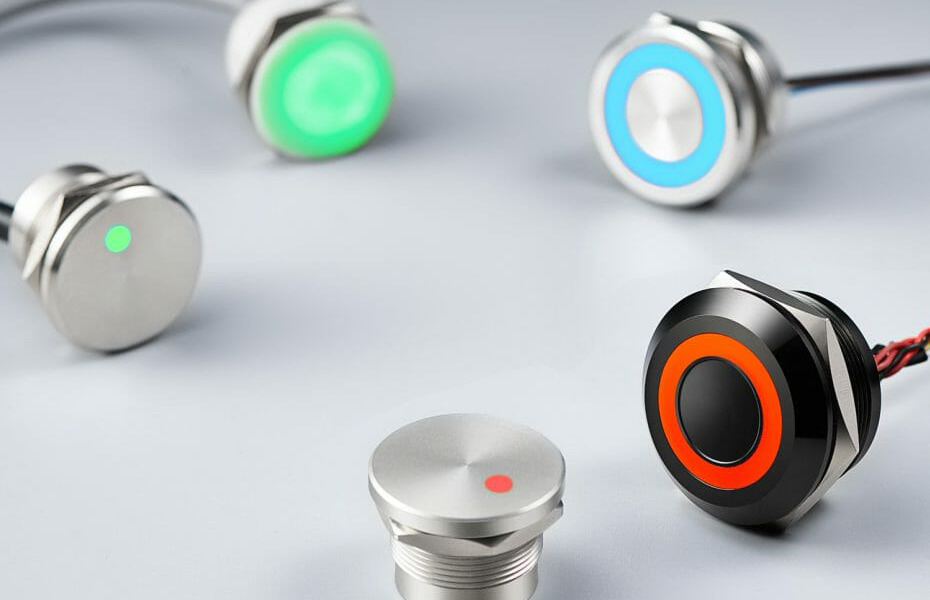
    Both types of switches are usually comprised of flat, metallic discs, sometimes surrounded by an illuminated ring that lights up when the switch is activated.

    Typically they are installed flush with the control panel, and with no moving parts they are often highly wear-resistant, dustproof, waterproof and suitable for repetitive operation. The durability of these switches means they can withstand millions of actuations and require little to no maintenance.[/vc_column_text][vc_column_text]

    Piezo switches

    [/vc_column_text][vc_column_text]Piezo switches[/vc_column_text][vc_column_text]A piezo is a small disc comprised of two layers; an inner ceramic layer and an outer layer usually made from a metallic substance. It reacts to the force of being touched and generates an electric charge, which effectively sends a signal that the button has been pushed.[/vc_column_text][vc_column_text]A piezo switch relies on mechanical displacement or bending of piezo ceramic – also known as the piezoelectric effect. The word piezo is derived from the Greek piezein, which means to squeeze or press. While there are no mechanical moving parts within the switch, it does require sufficient pressure to be applied in order to deflect the ceramic layer within.[/vc_column_text][vc_column_text]

    Capacitive switches

    [/vc_column_text][vc_column_text]Capacitive switch[/vc_column_text][vc_column_text]On the other hand, a capacitive switch, also known as a capacitance switch, requires just one electrode, which can be placed behind a non-conductive panel. The switch uses body capacitance, making use of the electrical charge naturally carried by the human body. The difference between the device itself and the fingertip is sensed, thereby triggering the switch.[/vc_column_text][vc_column_text]

    How to choose between the two:

    [/vc_column_text][vc_column_text]A piezo switch senses touch force or relies on a small force, while capacitive switches require a charge or electrode, typically generated from human touch. So for devices that are meant to react only to human touch, then the capacitive touch switch is ideal for this purpose.[/vc_column_text][vc_column_text]Capacitive switches are used in a wide selection of applications, from medical and laboratory equipment and food processing machinery to consumer applications such as appliances, vending machines and lift controls.[/vc_column_text][vc_column_text]Pricewise, capacitive switches are typically cheaper than piezo switches from a raw materials perspective.[/vc_column_text][vc_column_text]A user wearing thick gloves cannot operate a capacitive switch. They do however work with thin surgical gloves or specially designed conductive fibre gloves that will allow a charge to be passed from the hand to the switch. This is where the piezo switch truly comes into its own – these switches will function regardless of the type of glove the user is wearing as the switch depends on pressure to operate, not human touch.[/vc_column_text][vc_column_text]Langir’s range of piezo switches are vandal-resistant, waterproof and dustproof with an ingress protection rating of IP68 and IP69K, and the company’s range of highly durable capacitive touch switches will also soon be released.[/vc_column_text][vc_zigzag]

    Get Custom Quote
    We’ll get back to you within 12 hours.
    Drag & Drop Files, Choose Files to Upload You can upload up to 3 files.
    [/vc_column][/vc_row][vc_row][vc_column][vc_zigzag][/vc_column][/vc_row]